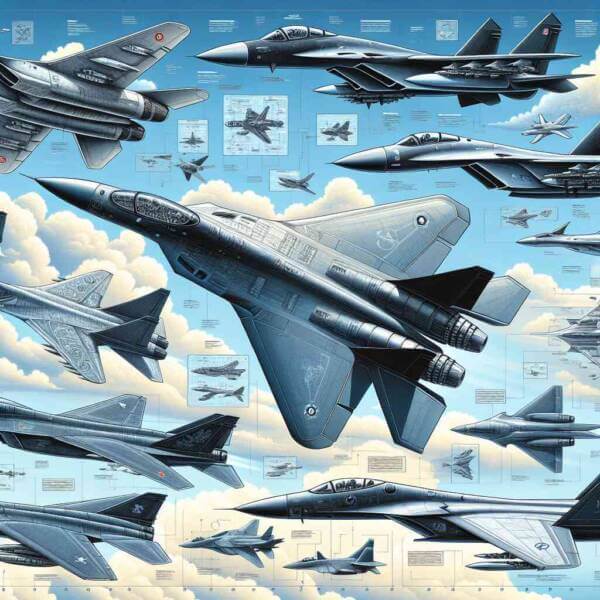
The use of aircraft in military operations offers superior capabilities.
Nations invest heavily in military aviation to protect national interests.
The Evolution of Military Aviation
As technology advanced, airplanes were adapted for offensive operations, changing the nature of warfare forever.
Important events in the evolution of military aviation:
- The introduction of fighter planes and bombers
- Massive growth in air power
- Rapid development of jet technology
- Modern drone warfare
Each era brought more powerful aircraft that redefined military capabilities.
Main Categories of Military Aviation
Military aviation includes a variety of aircraft, each designed for unique purposes.
Common categories of military aircraft are:
- Fighter jets
- Planes that deliver heavy payloads
- Logistical support aircraft
- Eyes in the sky for modern armies
Each type plays a key part in military operations, from supporting ground forces.
Why Control of the Skies Matters
Air superiority is essential for achieving military success.
How controlling the air impacts battles:
- Protecting ground forces
- Cutting off enemy resources
- Surveillance and reconnaissance missions
- Demonstrating power and deterrence
Nations with strong military aviation capabilities can control conflicts.
The Next Generation of Military Aircraft
Constant research and development push boundaries for future warfare.
Cutting-edge developments:
- Stealth technology
- Missiles and aircraft traveling at speeds greater than Mach 5
- Unmanned aircraft operating independently
- Directed energy weapons
These advancements enhance lethality for air forces worldwide.
Risks and Limitations
From high costs to geopolitical tensions, the road to air dominance is a constant battle.
Key challenges include:
- Expensive research and operations
- Short life cycles for cutting-edge aircraft
- Cybersecurity threats
- Questions about accountability and control
Addressing these challenges is necessary for effective defense strategies.
Future of Military Aviation
The future of military aviation promises radical innovations.
Future trends may include:
- Greater integration of artificial intelligence
- Military satellites and space-based weapons
- Reducing environmental impacts of defense operations
- Enhanced multinational cooperation
The next military aviation era of military aviation will revolutionize how wars are fought.
Final Thoughts on Military Aviation
Military aviation remains an irreplaceable element in global defense.
As technology continues to evolve, the skies will remain a vital domain where military aviation safeguards freedoms.
The future of military aviation is full of potential — and it’s only just beginning.